Monday, March 25, 2013

Instant - Snow

Polaroid Automatic 100 Fujifilm FP-3000B - Sunday was a snowy day in Lynchburg Virginia and this was the view from my office window. The first real test of my modified Polaroid Auto 100, an it worked perfectly. I was surprise how will this old cameras metering system handled the high Contrast scene, especially given that the ISO of this film is 3000!
Scanned using a HP Scanjet G4050 and HP's OEM Software


Sunday, March 24, 2013

Piedmont Flour Mill, Back Door exposure no. 2

Kiev 60 Arsat 80mm f2.8 Kodak Tri-X Profesional Arista 76 1:1 - Tones of an old friend, I have had a lifetime love affair with Kodak Tri-X, for years it was my "go to" film for almost everything. My mantra for the 1980's was push, push push, I loved grain and contrast and Tri-X pushed to ISO 800, 1600 or even 3200 would give me plenty of both. I am older and maybe little smother now, so this is Tri-X shot at 400 and developed in Arista 76 (D76) 1:1. Beautiful tonal range, great sharpness and well controlled contrast, maybe I have mellowed with age, not likely, I have just gained more range.
Shot of the back door the the Piedmont Flour Mill, downtown Lynchburg VA..
Scanned with an Epson V500 using Epson's OEM software.

Saturday, March 23, 2013

Alternative Energy Revisited

Mamiya Press 23 100mm f2.8 FUJIFILM Neopan Acros 100 Arista 76 Developer 1:1 - Created from a mistake during the shoot from my post Alternative Energy no. 2, this image contains a little more Photoshop work than I normal post here, but I believe interesting enough to share. I broke out my Mamiya Press 23 for the first time in many years and had for gotten that the film advance for this 6x9 rangefinder was a 2 stroke affair. Though I remembered after the 4th exposure, the 1st 4 frames were overlapped. What surprised me was the consistency and position of the overlaps. I used Photoshop to balance the exposure between the different sections of the overlaps, but decided not to blend the edges, as I believe the actually contribute to the feel of the image. I love the final result.

Below is the orginal "un-shopped" scan for comparison.
Scanned with an Epson V500 Using Epson's OEM scanner software.


Friday, March 22, 2013

From the Archive - My What a Big Popeye You Have

Nikon FE2 Nikkor 35-104 f3.5/4.5 Agfachrome 100 Pre-E6 - One from the archive, you never know what you will see when arrive for work a a shopping Mall. 10:00 AM in the parking lot of the old Coliseum Mall in Hampton Va. and I am greeted with the disembodied head of Popeye the Sailor. I did not realize he was quite that big. It appears Bluto finally got his revenge.
Scanned with a Minolta Dimage Scan Dual III and Minolta's OEM Software.

Saturday, March 16, 2013

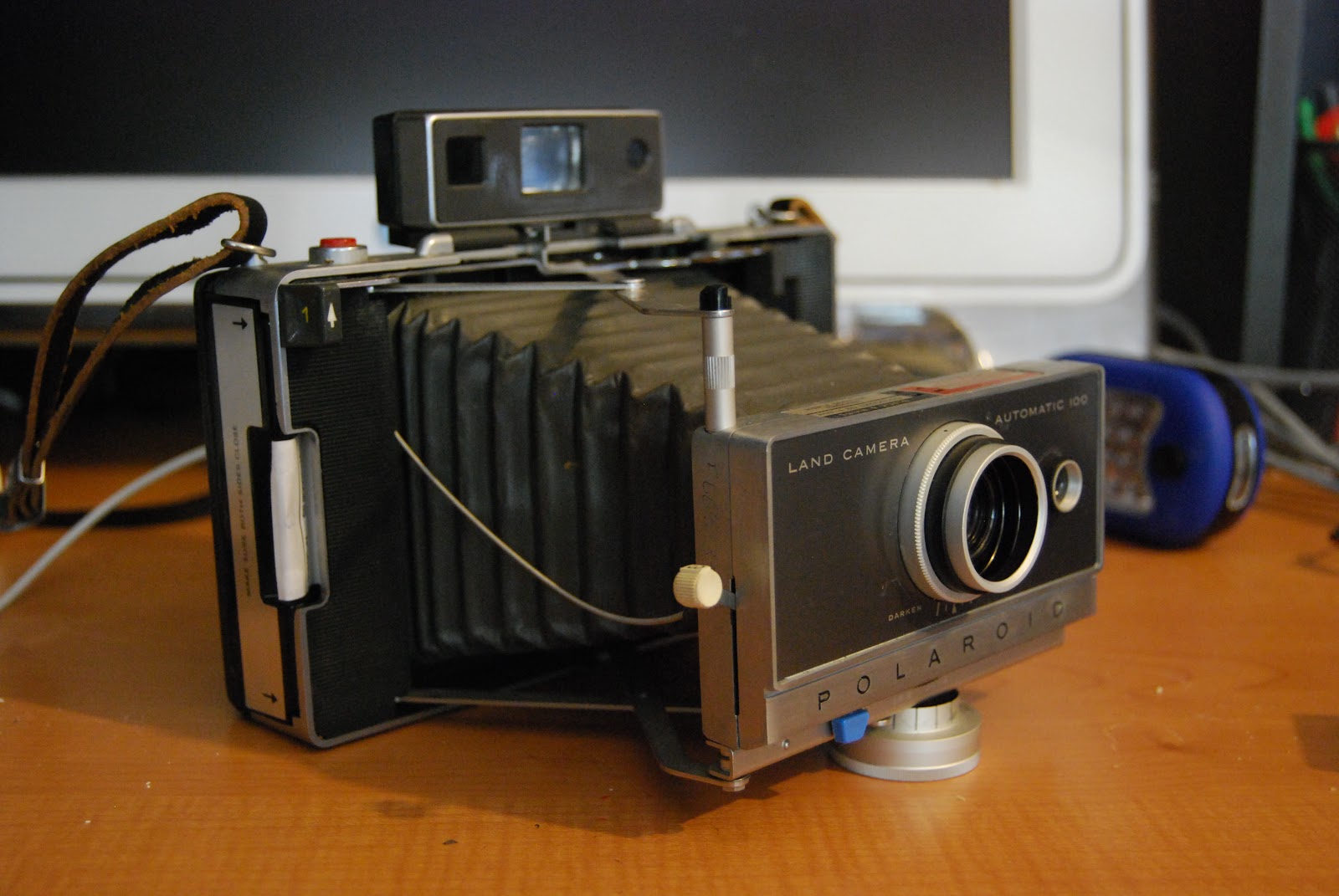
Polaroid Automatic 100 4.5v Battery Modification


The Polaroid Automatic 100 - This was my first instant camera. Actually this is the very camera used to take many of my baby pictures as it came into my family about the same time I did. To me, this is the classic Polaroid Pull and Peel pack film camera. Film is still readily available to these cameras in the form of Fujifilm FP-100c Color and FP-3000b Black and White. The original Polaroid Type 108 Color Film used in this camera was ISO 75 so you do have to make a minor adjustment for the slight faster Fujifilm FP-100c ISO 100 film.

Image source www.dianacamera.com Kai Yamada
The Achilles Heal of these cameras always seems to be the odd Eveready No. 531 4.5v battery that powered the automatic shutter. Generally only available from camera stores, the 531 was slightly larger than a AA battery and had 9v battery type connectors on each end. These batteries had a nasty habit of leaking when left in the camera too long, damaging the cameras internal connectors. Though still available the No. 531 is increasingly hard to find and expensive, so finding a more readily available and less expensive alternative is a must for those of us that want to continue using these cameras. The most common alternative is replacing the No. 531 with an external 3 AA or AAA Battery Holder. I chose the Radioshack Model #270-412 3 AAA 4.5v holder.


The conversion is relatively straight forward, simply a matter of removing the old 9v type connectors from the battery leads in the battery compartment of the camera and soldering the leads from the new battery holder to the leads of the camera. You can find detailed instructions at Instant Options, as well as a videos of the process on YouTube here and here. The battery holders demonstrated vary, but these are good starting points. To the left you can see my completed conversion with the battery holder mounted outside of the camera with velcro.


The biggest annoyance in the process is the fine gauge of the internal camera lead wires and the lack of slack for trimming and stripping the insulation. Any mistakes and the leads get short fast, so be careful and try to get the right the first time. Also if you do mount the battery holder on the back of the camera, remember to mount it a low as possible, mounting it to high can make focusing and viewing awkward. Do no mount it too far to the left as it will interfere with your ability to hold the camera firmly enough to pull the film after exposure.

The battery compartment door must also be notched to allow for proper routing of the new battery leads outside of the old battery compartment. The battery compartment door is thin aluminum and is easy to cut with a strong razor blade or wire snipes. The edges are sharp, I would suggest using a grommet or electrical tape to protect the wires from damage.

Mission accomplished, a new life for an old camera.


Polaroid Automatic 100 Specification

Lens: 114mm f/8.8 3-element glass
Shutter: Electronic; 10 seconds - 1/1200
Separate window view/rangefinder assembly (has a hinged base-- flips up for use and is held in place with a magnetic catch-- folds down for storage and fits inside the camera's plastic cover)
Viewfinder: Projected framelines and automatic parallax compensation.
Exposure Control: Aperture-priority automatic only
Film speeds: 75, 150, 300, and 3000 ASA.
Exposure compensation: Dial with range of -1/+2 stops 
Construction: Metal Body and metal shutter/lens housing; has tripod socket


Friday, March 8, 2013

Found on the Web: In a fast moving world… We could all do with a roll of 36 exposures

Great video. An excellent Blog post regarding it can be found here... http://blog.vincentlaforet.com/2013/03/07/always-remember-to-take-your-time-in-a-fast-moving-world/

Friday, February 22, 2013

Instant Tilty, Shifty, Swively, Twisty

Calumet Cambo View Camera Schneinder-Kreuznach Symmar 210mm f5.6 FujiFilm FP-100c - A little experimentation with Tilt, Shift and Swivel.

This 1st shot is was not front or back swivel. Note the Depth of field and focus of the forward rear paw.

On the 2nd shot the the lens plane and film plane are swiveled, again not the focus of the foward rear paw.


Aperture on both shots is the same at f8.0, but you can clearly see the paw on the second image is shot is in sharp focus. Obviously this technique is not revelation to experienced large format photographers, but is is uncharted territory for me. Just another destination on this journey.

Scanned using a HP Scanjet G4050 Scanner and HP Scan Pro Software.


Sunday, February 17, 2013

Hey Bulldog exposure no. 10

Kiev 60 Arsat Mir 45mm f3.5 20mm extension tube Fujifilm Reala 100 Arista C41 - This stern looking fellow was a gift from my Mother when I was 10 or so, and it has been a favorite shelf siiter of mine ever since. I believe it was a flea market or auction find, and made the perfect treasure for a young boy.

Shot using single studio strobe shooting through a white umbrella. The Mir 45mm's mild barrel distortion accentuates his regal face nicely. Scanning the series was difficult, the red caused a dominant color shift to cyan in Espon's OEM Scanner software, leaving me unable to get an acceptable color balance. HP's Scan Pro software for my Scanjet G4050 faired better especially on the brighter shots of this series. Out of the 12 exposures for the roll 6 were scanned using the G4050 and 6 using an Epson V500 and Vuescan 9.0.96. This image was scanned using the V500.

Sunday, February 10, 2013

A Pinch of Salt

Nikon FE2 Micro-Nikkor 55mm f2.8 Orwo UN54 Caffenol-C-M +20g Iodized Salt - Probably one of the few good uses for Instant coffee is developing film, my adventures with Caffenol continue. This is a variation of the Caffenol-C-M recipe found here. My normal Caffenol-C-M mix is as follow:

Start with 1 Liter of water
Add 54g of Arm and Hammer Washing Soda, Stir until dissolved.
Add 16g of Vitamin C Power, Stir until dissolved.
Add 40g of instant coffee (in this case Original Maxwell House), Stir until dissolved.

I usually let the mix stand for 10 to 15 minutes before use to allow any small are bubbles to escape.
A good starting point for for developing time is 15 minutes at 68℉ for an ISO 100 film, with constant agitation for the 1st minute and then 3 inversions every minute there after.

For this image I added 20g of iodized table salt to the mix to act of a restrainer. This helps reduce base fogging and streaking that can be a problems with the normal Caffenol-C-M mix. The addition of the salt worked well with Orwo UN54 resulting in minimal base fogging and great overall contrast. Shadow detail is also outstanding as you can see.
Scanned with a Minolta Dimage Scan Dual III using Silverfast 6.6.2r5 Software

Saturday, February 2, 2013

A Homage to Kodachrome - Dandy Point October 1985


Nikon FE2 Nikkor 50mm f1.4 Kodak Kodachrome 64 - I never shot a great deal of Kodachrome in my youth, it was slow, I was impatient, they two of us did not seem to have a lot in common. I was an avid Pre-E6 Agfachrome shooter, which had similar qualities and higher speed, but was never impressed with it once Agfa switch to an E6 Process film. After that I switched to Ektachrome, then Fujichrome, before moving on to shooting primarily negative films. I did shoot a few rolls of Kodachrome over the years and recently found this perfect example of the Kodachrome "Look." Shot is 1985, it could easily be 1965 or 1955, Kodachome's look was timeless. In hind sight I regret not using it more often and it is a shame it is no longer an option today. One of the sad casualty of the digital era.
Scanned with a Minolta Dimage Scan Dual III using Silverfast 6.6.2r5 Software